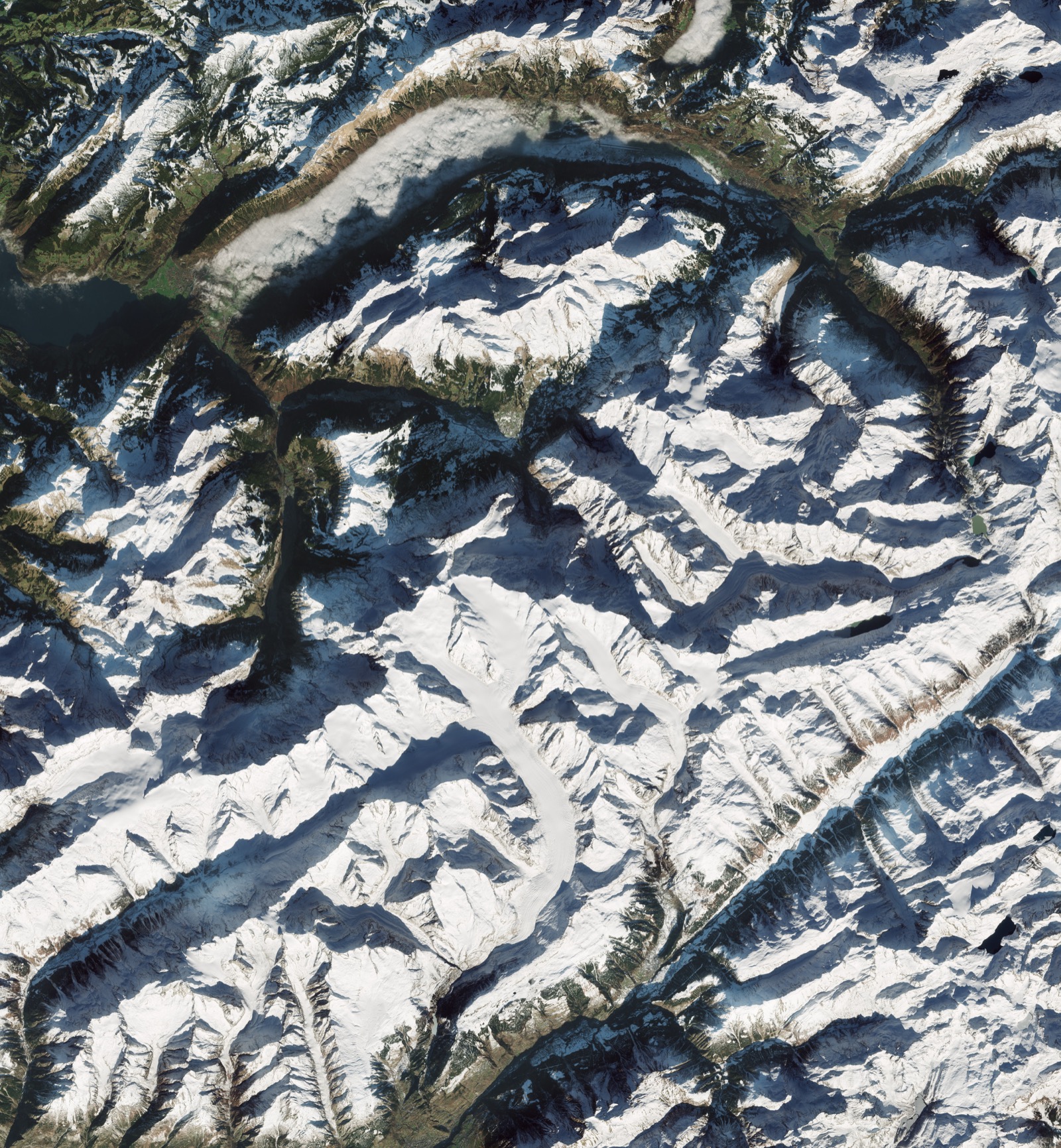
In 1483, the farmers of Törbel, a village in the Swiss Alps, wrote down a rule they had probably followed for generations before anyone thought to put it on paper. No villager may graze more cattle on the common meadow than they can feed through winter on their own hay. One rule, no enforcement agency, no external regulator, and five hundred and forty-three years later the meadows of Törbel are not overgrazed.
The political scientist Elinor Ostrom came to Törbel in the 1980s, and the village became the opening case study in her 1990 book Governing the Commons, the work that would eventually make her the first and still only woman to receive the Nobel Prize in Economics. What she found in Törbel, and in hundreds of communities across the world, was evidence that ordinary people can manage shared resources sustainably for centuries without privatisation or state control. Reliably, when certain conditions are present.
In Törbel, those conditions are visible at close range. Everyone in the village knows who belongs and who does not. The farmers who use the meadow are the same people who write and revise the rules governing it. Monitoring costs nothing because you can see your neighbour’s cattle from your own doorstep. Penalties for rule-breaking exist but they escalate gradually rather than starting at catastrophe. And when disputes arise, they are resolved locally, by people who have to live with each other the following week. The structure makes cooperation the easier path, which is why it holds for half a millennium without anyone having to enforce it from above.
Törbel does not offer a model for solving climate change. A village of 600 people managing a meadow they can see from their kitchen windows has almost nothing in common with 195 countries negotiating over an atmosphere none of them can own. But Törbel reveals, with unusual clarity, what coordination actually requires. And the environmental record of the past century provides a set of cases, at progressively larger scales, that test whether those requirements survive the jump from a Swiss meadow to a city, a continent, and a planet.
Some of them do. In December 1952, unusual weather trapped coal smoke over London for four days and killed 12,000 people. Four years later, Parliament passed the Clean Air Act. In the 1980s, acid rain was destroying lakes and forests across the northeastern United States; Congress responded with a programme that let power plants trade pollution permits among themselves, creating a financial incentive to cut emissions, and sulphur dioxide fell by 90% at less than half the projected cost, with health benefits exceeding $50 billion per year. In 1987, the Montreal Protocol united 198 countries to eliminate the chemicals that were destroying the ozone layer, and that layer is now on track to recover by mid-century. Each of these involved larger groups, higher costs, and longer time horizons than Törbel, and each succeeded.
Climate change has none of the features that made any of them possible. The clean energy alternatives exist: solar is cheaper than coal across most markets, heat pumps and electric vehicles are proven technologies. The obstacle is a $7 trillion fossil fuel subsidy system, an infrastructure base built for a century of carbon, and a fossil fuel industry whose core assets become worthless in the transition. The system is defending itself, and the costs of that failure fall unevenly. The countries that contribute least to the emissions bear the highest costs, and the countries most responsible have learned to frame those consequences as someone else’s emergency.
This is the question worth taking seriously: what made coordination work every time it worked, what is different about climate, and what does the gap between the two actually cost in human terms?
When 12,000 people die in your city, the feedback loop is short
The Great Smog arrived in London on 5 December 1952 and did not lift until the 9th. A high-pressure weather system trapped coal smoke at ground level across the entire city. Visibility dropped below 30 centimetres in some parts of London. Cattle at Smithfield Show asphyxiated. Ambulances could not navigate the streets. The initial government estimate was 4,000 deaths, a figure later revised upward to 12,000 when researchers counted the deaths that continued for months afterward.
The political response was not fast by any reasonable standard. It took four years. The Clean Air Act of 1956 established smoke control areas where only smokeless fuels could be burned, and provided grants for households to convert their heating systems. But when it came, it was decisive, and the reason it worked is worth understanding: the people who died and the people who voted and the people who could change the law were all living in the same city, breathing the same air. The feedback loop between cause, harm, and political response was measured in miles and months. A parliamentarian could look out of his window at Westminster and see the smog that was killing his constituents.
This pattern, where coordination succeeds because harm is visible, immediate, and locally felt by the people with the power to act, shows up again and again.
The United States acid rain programme tells a parallel story at national scale. By the 1980s, sulphur dioxide from coal-fired power plants was acidifying lakes and killing forests across New England and the Adirondacks. The 1990 Clean Air Act Amendments created a system in which power plants received permits to emit a set amount of pollution and could buy or sell those permits among themselves, so that companies who cut emissions faster could profit from doing so while the overall cap tightened over time. The results exceeded every projection. Sulphur dioxide emissions fell by over 90%. The EPA had estimated implementation costs at $6 billion per year; actual costs came in between $1 and $3 billion. The health benefits from reduced air pollution alone were estimated at $59 to $116 billion annually by 2010, a benefit-to-cost ratio exceeding 50 to 1.
The cost story deserves emphasis because it recurs in every successful coordination case: the projected expense of action consistently overestimates the actual expense, often by a factor of two or more, while the benefits consistently exceed expectations by roughly ten times or more. When industries lobby against regulation, they have every incentive to inflate cost projections and no incentive to measure the benefits that would come from acting. When coordination actually happens, innovation compresses costs in ways that projections made before the policy could not have predicted.
The acid rain programme also shared London’s key feature. The sources were identifiable: roughly 400 large power plants, owned by known utilities, emitting a pollutant that could be measured at the source. The victims were identifiable: lake and forest ecosystems in specific, politically represented states. The alternative was available: lower-sulphur coal and technology to clean exhaust gases existed before the regulation. And the costs fell on entities large enough to absorb them and pass them through to consumers, who experienced price increases too small to trigger political backlash.
The coalition of the green and the greedy
The Montreal Protocol, signed on 16 September 1987, is the most successful international environmental agreement ever negotiated, and possibly the most successful international agreement of any kind. It achieved universal ratification by all 198 UN member states, has eliminated 99% of ozone-depleting substances, and is on track to prevent roughly 2 million skin cancer cases per year by 2030 while having avoided an estimated 0.5 to 1.0°C of additional warming. The ozone layer should recover to 1980 levels by approximately 2066 over Antarctica and earlier elsewhere.
The story is usually told as a triumph of science and diplomacy, and it is both of those things. In 1974, two scientists published the hypothesis that chemicals used in refrigerators and aerosol cans, called chlorofluorocarbons or CFCs, were destroying the ozone layer. The Antarctic ozone hole was confirmed in 1985. The treaty was signed in 1987. Thirteen years from hypothesis to binding global action, which remains the fastest timeline for any planetary-scale environmental response.
But the conditions that enabled it are more revealing than the timeline. Global CFC production was concentrated among roughly 18 companies in four countries. DuPont alone produced about a quarter of global output, yet CFCs represented only about 2 to 3% of the company’s total sales. When DuPont’s original Freon patent expired in 1979, the company initially formed a lobbying group, the Alliance for Responsible CFC Policy, to fight regulation. It worked: under the Reagan administration, there was no political pressure for action. But DuPont was simultaneously investing in patented replacement chemicals. By 1986, with new patents in hand, the company reversed its position entirely and publicly condemned CFCs. DuPont representatives appeared before the Montreal Protocol negotiations urging a worldwide ban on the very chemicals the company had spent a decade defending.
The reversal was strategic, not moral. Regulation would force every competitor to license DuPont’s patented alternatives. The environmental imperative and the commercial opportunity pointed in the same direction. The UN official who led the negotiations, Mostafa Tolba, is reported to have described the outcome as a coalition of the green and the greedy.
The entire global CFC market was worth approximately $1 billion per year. The fund established to help developing countries transition has disbursed about $3.9 billion over three decades. These are significant sums, but they are manageable. No economy was destroyed, no geopolitical position threatened. The costs were absorbable, the alternatives were available, and the biggest company in the market had more to gain from regulation than from the status quo.
And that is precisely what makes climate change a different category of problem.
The system that defends itself
Global greenhouse gas emissions hit a record in 2023, and under current policies, the world is heading for approximately 3.1°C of warming. The UN climate science panel found that the power plants, factories, and infrastructure already built and operating today will, over their remaining lifetimes, emit more than the atmosphere can absorb if warming is to stay below 1.5°C. The things we have already constructed will, if left running, break the target before any new project adds a single tonne.
The contrast with every successful coordination case is systematic, and it starts with the most basic variable: how many actors are involved. Where the Montreal Protocol required agreement among 18 companies, climate change involves millions of emitters in every sector of every economy on earth. Where London’s smog could be traced to domestic coal burning within a single city, carbon dioxide has no colour, no smell, and no local signature that ties it to the person who emitted it. Where acid rain came from 400 identifiable power plants, the fossil fuel system is woven into transport, agriculture, heating, industry, and the physical layout of cities built over a century of cheap carbon.
This is where the usual comparison between climate and the Montreal Protocol gets the diagnosis wrong. The standard analysis says climate is harder because there is no single replacement for fossil fuels the way DuPont’s new chemicals replaced the old ones. But the alternatives do exist. Solar energy is now the cheapest source of electricity in history in most markets. Heat pumps, which heat and cool buildings using electricity instead of gas, are proven and commercially available. Electric vehicles are approaching price parity with petrol cars. The technology for a low-carbon economy is largely ready.
What makes climate coordination different is that the fossil fuel industry cannot make DuPont’s move. DuPont could pivot from the old chemicals to the new ones because they served the same function through the same distribution channels for the same customers. The pivot was commercially attractive. Fossil fuel companies cannot pivot from oil and gas to solar and wind without writing off the value of their oil wells, their pipelines, their refineries, and the geopolitical power that comes with controlling energy supply. The transition does not offer them a more profitable position on the other side. It offers them obsolescence.
This is why global fossil fuel subsidies reached $7 trillion in 2022 according to the IMF. That figure includes $1.3 trillion in direct payments and tax breaks, plus another $5.7 trillion in costs that fossil fuels impose on society, through air pollution, climate damage, and health impacts, that nobody is required to pay for. Together, these subsidies dwarf all climate finance combined. The system is coordinating effectively, just in defence of the existing structure rather than toward a new one.
The resistance runs through every level. Companies lobby against regulation and fund campaigns to keep friendly legislators in office. Industry groups frame climate action as a threat to jobs and energy security. Trillions of dollars in existing infrastructure, from pipelines to refineries to power plants, were built to run for decades and will not be abandoned before those decades are up, because the financial incentive is to keep burning what has already been built to burn. And the rules governing energy markets were written around fossil fuel assumptions, which makes it harder for alternatives to compete even when they are cheaper. Researchers call this carbon lock-in: a system where every part, the technology, the infrastructure, the regulations, and the business models, has been shaped around fossil fuels for so long that they reinforce each other, and no single piece can change without the others changing too.
The EU Emissions Trading System illustrates the pattern in miniature. Launched in 2005, it has driven substantial emissions reductions in the power sector, where a limited number of large plants can switch between fuels and pass carbon costs through to consumers. But it struggled for years with industrial emissions, where manufacturers who compete internationally could threaten to move production to countries without carbon costs, and where governments responded by handing out free pollution permits. The carbon price crashed in early phases because too many permits were issued. Successive rounds of reform have tightened the system over two decades. The lesson is that even the world’s most sophisticated carbon pricing system, operating within the European Union with some of the strongest environmental institutions in the world, needs 20 years to build effective coverage, because the resistance adapts faster than the policy.
The system was designed for a different planet
These coordination failures are not random. They emerge from an economic system whose basic assumptions were established when the global population was under a billion people, GDP was a fraction of today’s, and the idea that human activity could change the composition of the atmosphere was something nobody had thought to worry about.
Adam Smith published The Wealth of Nations in 1776, in a world of local markets, artisan production, and horse-drawn transport. His concept of an invisible hand, used only three times across his entire body of work and arguably with some irony, was reimagined in Paul Samuelson’s 1948 economics textbook as a universal mechanism by which self-interested behaviour produces the best outcomes for everyone. Smith himself never made that claim. He assumed economics operated within moral limits, as described in The Theory of Moral Sentiments, published seventeen years before The Wealth of Nations. The modern separation of economics from ethics, and the assumption that markets left alone will produce the best outcomes for society, is a twentieth-century construction built on an eighteenth-century foundation that was more nuanced than its inheritors admit.
For most of the history of economic thought, the costs that one person’s activity imposes on others, pollution being the clearest example, were treated as edge cases. When economists formalised the concept in the early twentieth century, they assumed these spillover costs were rare exceptions to an otherwise well-functioning system. When Ronald Coase argued in 1960 that private bargaining could sort out such problems without government involvement, the theory required zero costs of negotiating and everyone agreeing on who owns what, conditions he himself acknowledged were impossible for any environmental problem involving millions of people. Economics was built on the assumption that the atmosphere, the oceans, and the biosphere were either infinite or irrelevant.
GDP, the metric that drives virtually all economic policy worldwide, was invented by Simon Kuznets in 1934 as a tool for measuring the depth of the Great Depression, and Kuznets immediately warned against using it as a measure of how well a country’s people are actually doing. In his report to Congress, he wrote that the welfare of a nation can scarcely be inferred from a measurement of national income. He later insisted that distinctions must be kept in mind between quantity and quality of growth, between its costs and return, and between the short and the long term. These warnings were ignored. GDP was institutionalised at the 1944 Bretton Woods Conference through the IMF and World Bank, cemented by the 1946 US Employment Act, and by the late 1970s had become the default goal of economic policy across the political spectrum.
The gap between what the economic system measures and what the planet requires has widened with each decade of measurement. The Club of Rome warned in 1972 that infinite growth on a finite planet was a mathematical impossibility, and a 2008 review found that 30 years of data tracked their projections closely. Nicholas Stern’s 2006 review for the UK government called climate change the greatest market failure the world has ever seen. The planetary boundaries framework, which maps the safe operating limits for nine earth systems, now shows seven of nine breached as of the September 2025 Planetary Health Check, with ocean acidification confirmed as crossed for the first time. Only two boundaries remain within the safe zone: air pollution from particles, and the ozone layer, the one protected by the Montreal Protocol.
Kate Raworth’s Doughnut Economics framework asks a simple question: can any country meet the basic needs of its people without overshooting what the planet can sustain? In a 2025 study published in Nature, she and Andrew Fanning tested this across more than 150 countries. The answer is zero. Not one country meets fundamental human needs without exceeding ecological limits. The richest 20% of countries, with 15% of the global population, contribute over 40% of ecological overshoot. The poorest 40%, with 42% of the population, bear over 60% of social shortfall while contributing negligible overshoot. The system is working as designed, for conditions that no longer exist.
The receipt
In 2024, weather-related events triggered 45.8 million internal displacements, the highest annual figure since monitoring began in 2008 and more than double the ten-year average. The World Bank projects up to 216 million people forced to move within their own countries by 2050 because of climate impacts. Some estimates that include floods, storms, and other sudden disasters reach 500 million.
The chain from emissions to displacement runs through specific, documented mechanisms. In the Sahel, where temperatures are rising at 1.5 times the global average, Lake Chad has lost approximately 90% of its surface area since the 1960s. The collapse of fishing and farming livelihoods around the lake basin created conditions that armed groups including Boko Haram exploited, contributing to over 35,000 deaths and more than 2 million displaced people across the region. In Central America’s Dry Corridor, a 2018 drought destroyed 80% of maize and bean crops in affected areas, and coffee production is projected to drop at least 40% by 2050. The droughts, the crop failures, the armed conflict, and the displacement that follows are what happens when a changing atmosphere meets farming systems with no margin for shock and governments with no capacity to respond.
Bangladesh produces 0.3% of global emissions and faces the prospect of losing 11% of its land area to a 0.5-metre sea level rise, potentially displacing 18 million people. Tuvalu, with a mean elevation of 2 metres and a population of 10,000, negotiated the world’s first climate visa arrangement with Australia in 2023, offering 280 residents permanent residency per year. By the time the ballot closed in July 2025, registrations covered more than 80% of the population.
The numbers on who causes the damage and who bears it are stark. The 50 most climate-vulnerable countries contribute 0.28% of global CO₂ emissions. The United States alone accounts for roughly 20% of all emissions since the industrial revolution. Emissions per person per year in the US are 13.8 tonnes; in Bangladesh, 0.6 tonnes; in Chad, 0.1 tonnes. The countries ranked most vulnerable and least prepared to adapt, including Chad, the Central African Republic, Eritrea, and South Sudan, have contributed negligibly to the problem. The Loss and Damage Fund agreed at the 2022 UN climate summit had received pledges totalling approximately $768 million as of early 2025, which is roughly 0.1% of the estimated $400 billion that developing countries require annually.
Governments overwhelmingly treat climate migration as a security problem. The Pentagon calls climate change a threat multiplier. NATO, the EU, and successive US defence reviews identify mass migration and resource competition as security threats requiring military and border responses. The framing itself reveals the broken feedback loop. Displacement is the signal that should trigger corrective action on emissions. Instead, it gets reclassified as a border management challenge and handed to institutions that have no mandate to address its origins.
This is one system, not many separate problems. An economy built to grow at all costs pushes those costs onto the planet. The planetary costs produce climate change and biodiversity loss. The ecological breakdown destabilises agriculture and livelihoods. The instability produces forced migration. And the countries whose emissions set the chain in motion treat the people displaced by it as a security threat. Each link is governed by different institutions, measured by different metrics, and debated in different policy arenas, which is why no institution is responsible for the chain as a whole.
The design question
Coordination works when harm is visible to the people with the power to act, when the number of key actors is small enough for agreement to be feasible, when alternatives exist and the biggest players in the existing system can profit from switching, when costs are absorbable, and when benefits arrive within the decision-maker’s time horizon. Every successful environmental coordination in the historical record, from Törbel’s meadow to the Montreal Protocol, had all of these features present simultaneously. Climate change is the first problem in that record where all of them are absent at once. The alternatives exist, but the fossil fuel industry cannot profit from switching. The harm is real, but it falls on people with no power to act. The benefits of coordination would be enormous, but they arrive after the current generation of decision-makers has left office.
And every time coordination has been attempted and sustained, the economics have turned out better than projected. Acid rain costs came in at less than half of estimates, with benefits exceeding projections by 50 to 1. The Montreal Protocol’s total transition cost was modest relative to the scale of the problem, and the ozone layer is recovering ahead of some projections. The pattern holds across every case: projected costs of environmental action are inflated, and benefits are undercounted.
What this means is a design question, not an optimisation question. Markets optimise. They find the cheapest source of energy, the highest return on capital, the most efficient production method, all within the rules of the existing system. Markets cannot change their own rules, impose costs on themselves, or price in harm that arrives three decades later on a different continent. The gap between where current interventions are focused, adjusting tax rates and subsidy levels and carbon prices, and where the evidence says they would be most effective, changing the rules themselves and what we measure as progress, is itself the coordination failure.
Systems thinkers have long argued that the most powerful place to intervene in a system is not at the level of its parameters, the tax rates and subsidy amounts, but at the level of its goals: what the system is designed to achieve. Current climate policy operates overwhelmingly at the weakest level, adjusting numbers within existing rules. Replacing GDP growth with wellbeing within planetary boundaries, as Bhutan, New Zealand, and Amsterdam have begun to experiment with, is what the engineering specification requires, even if current political incentives make it difficult to pursue.
No country has yet demonstrated that human needs can be met within planetary boundaries. But Costa Rica comes closest, achieving near-universal social outcomes and over 98% renewable electricity on less than half the income of wealthy nations. In March 2026, the World Happiness Report ranked Costa Rica fourth in the world, the highest position ever achieved by a Latin American country, ahead of Sweden, Norway, and every English-speaking nation. The methodology has limitations, but the directional finding is hard to dismiss: a country that comes closest to living within planetary means also ranks among the happiest on earth, which suggests the constraint is design rather than resources, and systems that are designed can be redesigned.
The question is whether that redesign happens before the window closes, or whether we continue to optimise a machine that was built for a planet that no longer exists.
References and further reading
Ostrom, E. (1990). Governing the Commons: The Evolution of Institutions for Collective Action. Cambridge University Press.
Raworth, K. (2017). Doughnut Economics: Seven Ways to Think Like a 21st-Century Economist. Random House.
Fanning, A. L. & Raworth, K. (2025). Doughnut of social and planetary boundaries monitors a world out of balance. Nature, 646, 47-56.
Sakschewski, B., Caesar, L. et al. (2025). Planetary Health Check 2025. Potsdam Institute for Climate Impact Research.
Richardson, K. et al. (2023). Earth beyond six of nine planetary boundaries. Science Advances, 9(37).
Coase, R. H. (1960). The problem of social cost. The Journal of Law and Economics, 3, 1-44.
Meadows, D. H., Meadows, D. L., Randers, J. & Behrens, W. W. (1972). The Limits to Growth. Universe Books.
Unruh, G. C. (2000). Understanding carbon lock-in. Energy Policy, 28(12), 817-830.
Geels, F. W. (2014). Regime resistance against low-carbon transitions. Theory, Culture & Society, 31(5), 21-40.
Maxwell, J. & Briscoe, F. (1997). There’s money in the air: the CFC ban and DuPont’s regulatory strategy. Business Strategy and the Environment, 6(5), 276-286.
Barrett, S. (2016). Coordination vs. voluntarism and enforcement in sustaining international environmental cooperation. PNAS, 113(51), 14515-14522.
Stern, N. (2006). The Economics of Climate Change: The Stern Review. Cambridge University Press.
Meadows, D. (1999). Leverage Points: Places to Intervene in a System. The Sustainability Institute.
Parenti, C. (2011). Tropic of Chaos: Climate Change and the New Geography of Violence. Nation Books.
Mildenberger, M. (2020). Carbon Captured: How Business and Labor Control Climate Politics. MIT Press.
Stoddard, I. et al. (2021). Three decades of climate mitigation: why haven’t we bent the global emissions curve? Annual Review of Environment and Resources, 46, 653-689.
World Bank (2021). Groundswell Part 2: Acting on Internal Climate Migration.
IMF (2023). IMF Fossil Fuel Subsidies Data: 2023 Update.
UNEP (2024). Emissions Gap Report 2024.
Internal Displacement Monitoring Centre (2025). Global Report on Internal Displacement 2025.
Wellbeing Research Centre, University of Oxford & Gallup (2026). World Happiness Report 2026.